Tape Recording!!
I recently found an old 90s tape recorder in a thrift shop: A Marantz PMD222!! I am very excited :)The decades old belts driving the cassettes had loosened too much and fell off as soon as I tried to play a cassette in it, but I luckily found this German store that sold the exact replacement set.
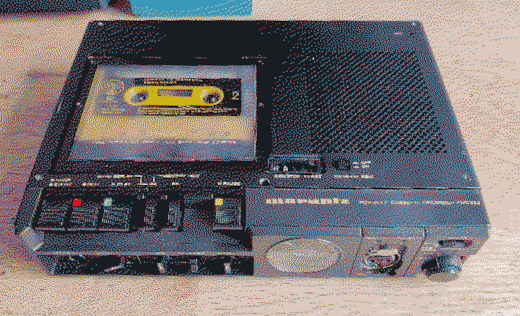
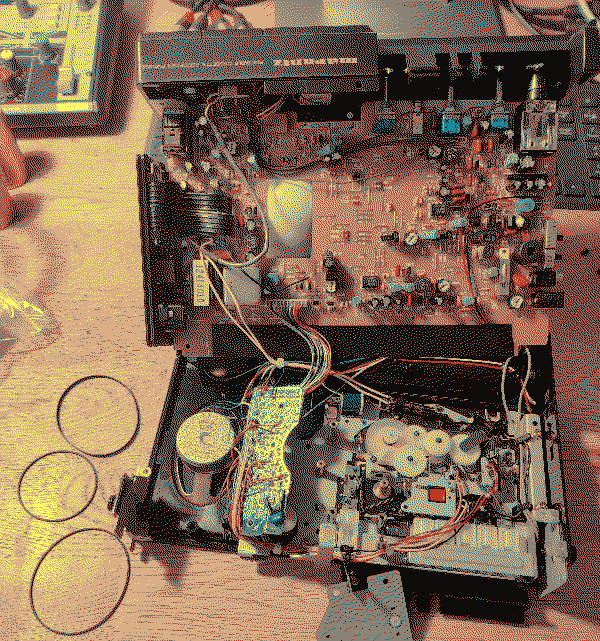
Now, you might say: "wth is he doing with a tape recorder in 2026?"
Or possibly: "ugh, another analogue snob with GAS (Gear Aquisition Syndrome) that won't accept the superiority and convenience of modern, digital music production software."
...I'm not like that though!! Here are my (possibly delusional) answers:
I work in front of a computer screen all day, which I realised became quite a barrier for my music production hobby: I often wanted to produce music after work, but I did not want to look at a screen.
Hardware like this tape recorder have become an awesome solution to this problem, albeit one should of course beware of untamed GAS. Also, there's something creatively stimulating about pushing tactile buttons instead of moving a mouse around on a distracting computer.
Still, modern digital audio workstations (DAWs) like Ableton are obviously crazy good, sufficiently capable of emulating analogue hardware, and still a necessary final stop for ideas I'm serious about (however, my recent 'Norwegian Sceneries' jam was indeed completely DAWlessly produced). A computer and a DAW can truly be all that you need these days.
All that being said: take a look at the video below, exemplifying tape saturation, wobbly pitch shifting and tactility. I obviously drove the input gain WAAAAAY to hard on this one, so the recorded piano became extremely harsh. I'll have to practice on the settings here, to get a more sweet tape saturation. But perhaps you get the idea anyway: Record something at an input gain that slightly saturates the sound, manipulate with the playback speed, enjoy the wobbliness of tape and use the lo-fi result creatively!